Embƒrking forever
Minecraft as
poetic practice
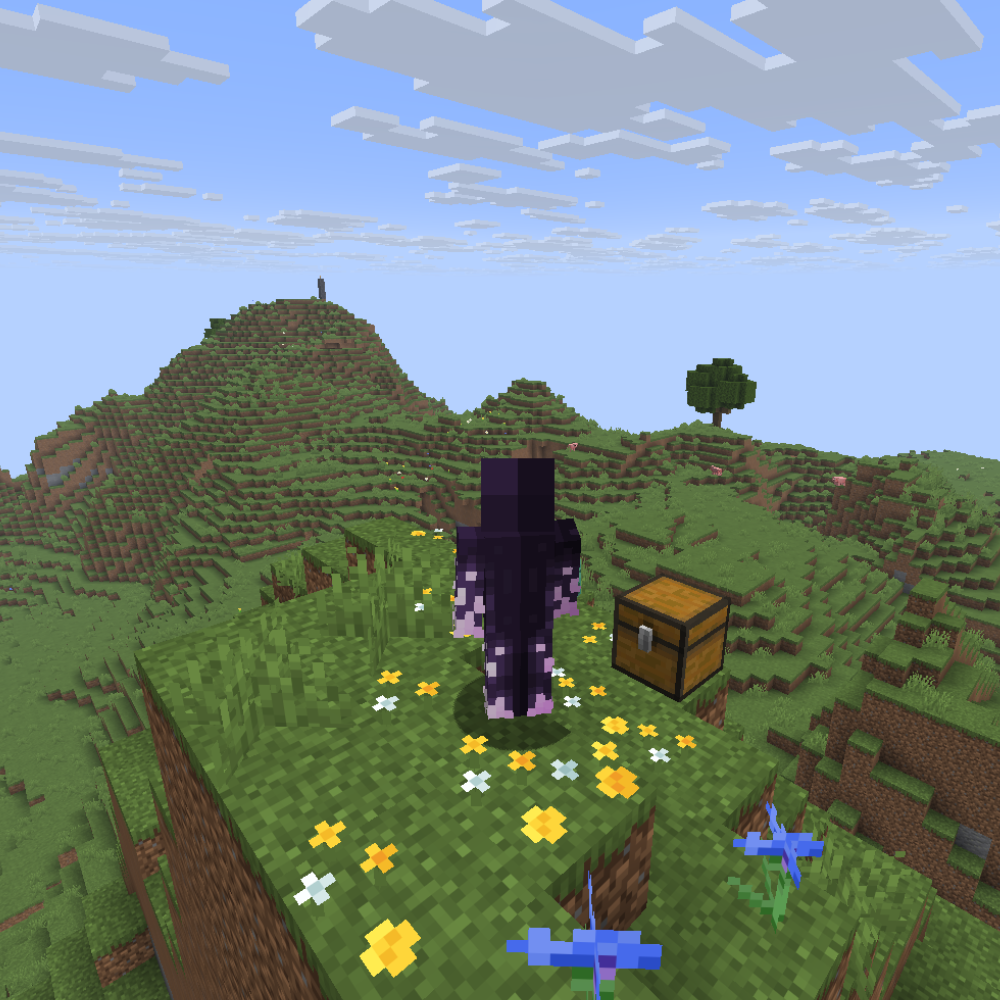
My best poems are shaped like squares. I am routinely awestruck by the literary and aesthetic abundance that can emerge from such a rigid shape, where a small grid unfolds to become an entire world.
Sustained playtime in Minecraft is analogous to my practice as a digital poet. When I make poetry, or write code, or play Minecraft, I occasionally experience a bolt of euphoric clarity as the words, or functions, or blocks I am wrangling slide perfectly into place. For me, writing and gaming share that moment of discovering new materials and possibilities that resonate deeply. The grid unfolds and I am instantly inspired to learn more, to understand convention and constraint, and to shape something meaningful and new. Playing Minecraft teaches me more about poetic possibilities, and creating computational poetry in turn inspires me to expand my vision of what Minecraft could be.
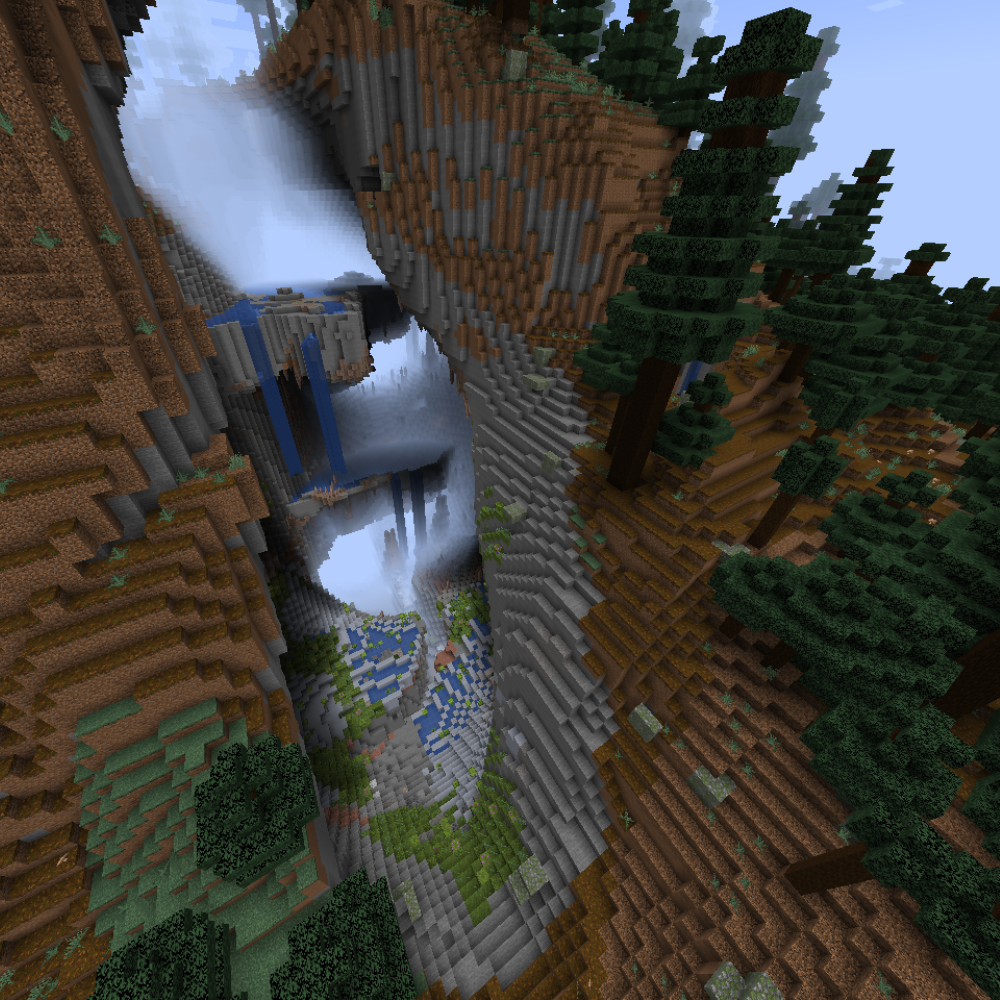
Minecraft is a completely different video game for different people. At its core, it's a simple open-world sandbox game with a cubic graphic style; easy to recognise and easy to play. Hang out with your friends on a multiplayer server, or start a new solo world alone. Play it in the default “vanilla” style or customise the look and feel in any way you can imagine through mods and data packs. Fight a dragon, learn chemistry, survive a zombie apocalypse, work on a lunar base, rebuild Middle Earth, rebuild the actual Earth, compete in international skills battles, roleplay complex economic models with your friends, or wander to the edge of the world alone—the expanded universe of Minecraft is endless.
Minecraft does not present traditional video game staples like player progression and narrative as mandatory. By design, Minecraft leaves it up to the player to create their own stories, goals and meaning in a new world. It's sometimes described as more of a platform than a game, or even, as artist Afrah Sahfiq puts it, “a folk form of the internet and the video game world” where its openness allows it to be treated as a creative medium.
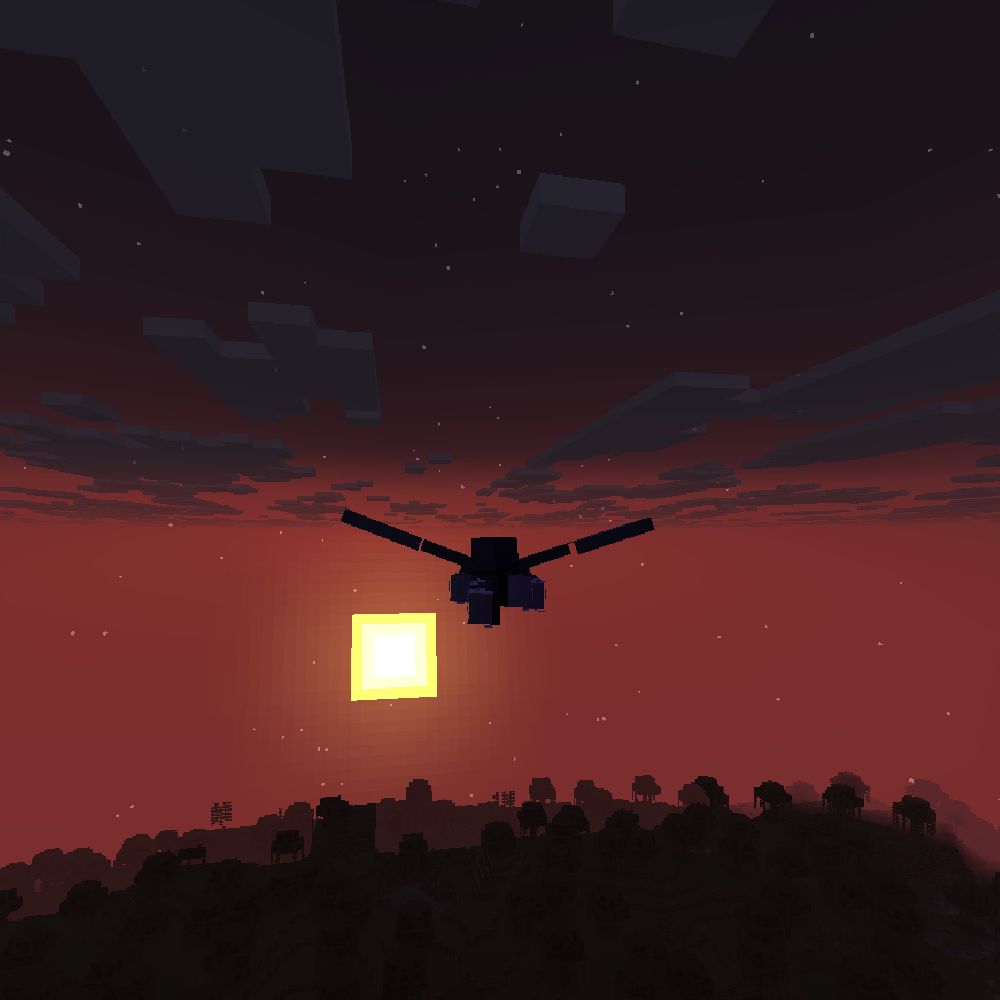
I have been playing Minecraft for a long time, and experimented with many projects and playstyles, but playing alone in a vanilla world will always appeal to me for its meditative, transformative magic. There is a strong sense of melancholy built into the bedrock of Minecraft, which irrevocably unfurls across all aspects of a solo world.
As a new world loads, and I am then dropped into it, those first moments of awe—staring down the open plains and colossal mountains and sparse cavernous ruins of a unique world—begin this magical process. The world reveals itself to be at once unfathomably huge yet intimate. Algorithms procedurally generate a functionally infinite terrain, so that each step forward renders new sections of the world for me to explore. I am simultaneously at the centre of the universe and an insignificant afterthought in a world that has seen civilisations peak and fall to obscurity. I may be the only player to ever see this world, and so I treasure it.
Taking those first steps into a new Minecraft world produces something like the feeling of reading a procedurally generated poem: knowing that both were created through a set of rules, that the combination of those rules can produce surprising results, and that each particular output is unique.
As a computational poet, I tend to work by curating and compiling banks of words, then defining the generative rules that will randomly place those words into a specific poetic structure. To make meaning from chance, structure, and unexpected combinations is to cede a level of control while expanding the shape and scale of the poem.
Minecraft creates a similar feedback loop for me where, as an explorable world and a creative medium, I can simultaneously traverse infinite gridded landscapes and construct poetic systems. In a Jungian reading of Minecraft, Tiger Dingsun writes that the game “holds a certain tension between its systematic procedural side, and its emotional creative side.” Players return to Minecraft because of this openness to set their own expressive goals within a structure of simple but strict rules. For all its mindboggling scale, the infinite is made comprehensible through a grid of squares. Similarly, the potentiality of a poetic system is contained within its constituent parts, but I cannot know exactly what magic will emerge until I encounter it.
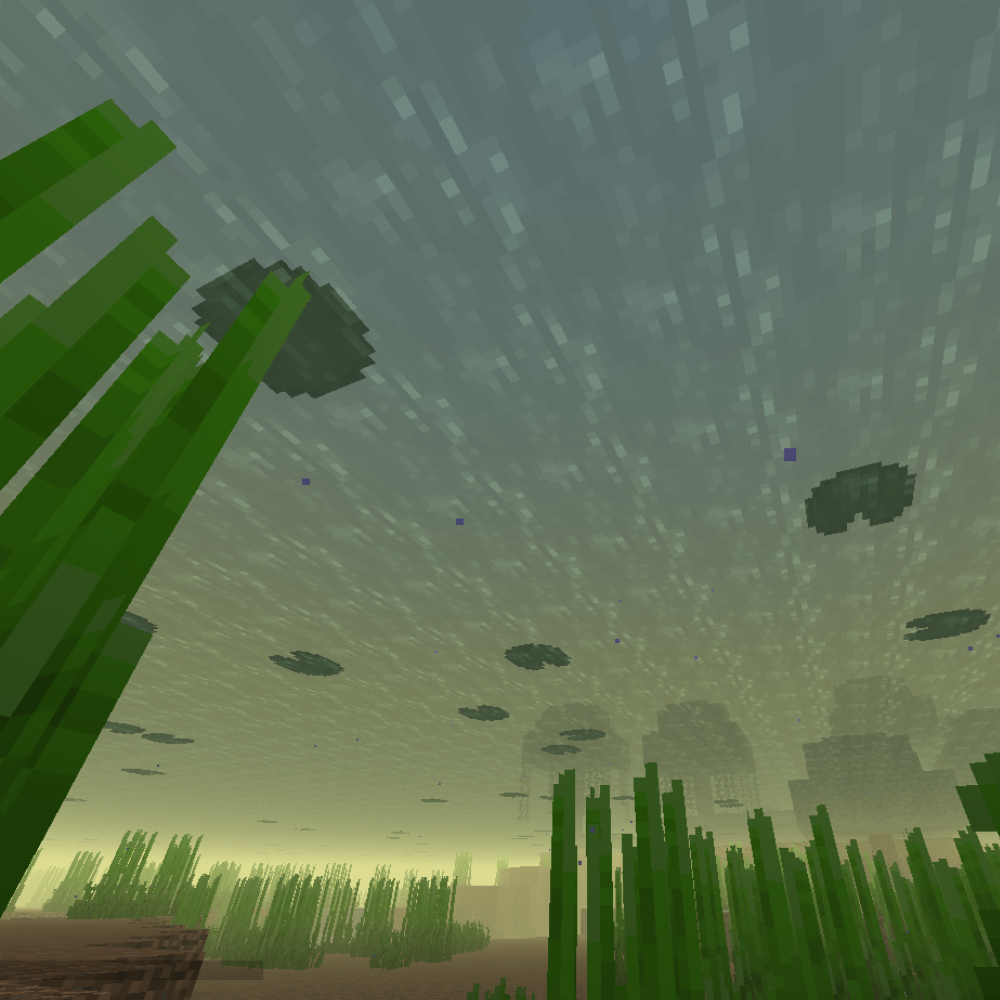
I don't think I ever stood a chance when faced with the feeling of fragility that a big cube-based vista provides. When I write poems, the hook always gestures to that transformative, unfolding scale and vulnerability that is naturally cultivated when stepping into a new and strange world.
I'm interested in the daunting feeling of openness—so I build these landscapes out of poems: rolling hills to be eroded word by word, an island made of infinite layers of textual rock strata, a forest of symbols hiding a lattice of words. As digital poems, they employ interactivity or animation to describe and embody landscapes that shift, subsume or evaporate, but they are also consistently concerned with constraint, layers and exploration. It took me a long time making poems and playing Minecraft separately to see that they are two parts of the same practice.
I have transposed Minecraft into my poetry, but in doing so, this has also changed the way I play Minecraft. I see landscapes as compositions, make notes on viewpoints, contemplate blocks and items as units of language, and think about how buildings or caves could become structures to be read. The more I play and write, the more I am engrossed by the poetic possibilities within Minecraft.
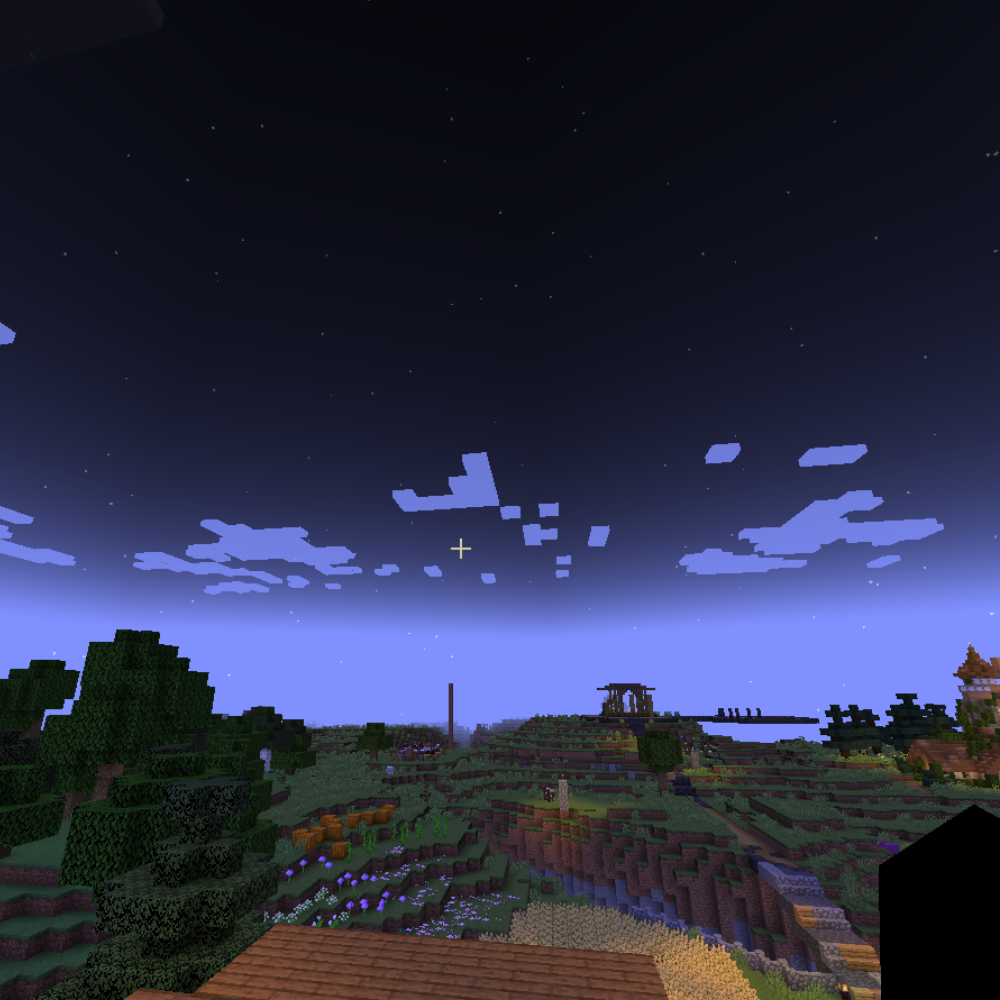
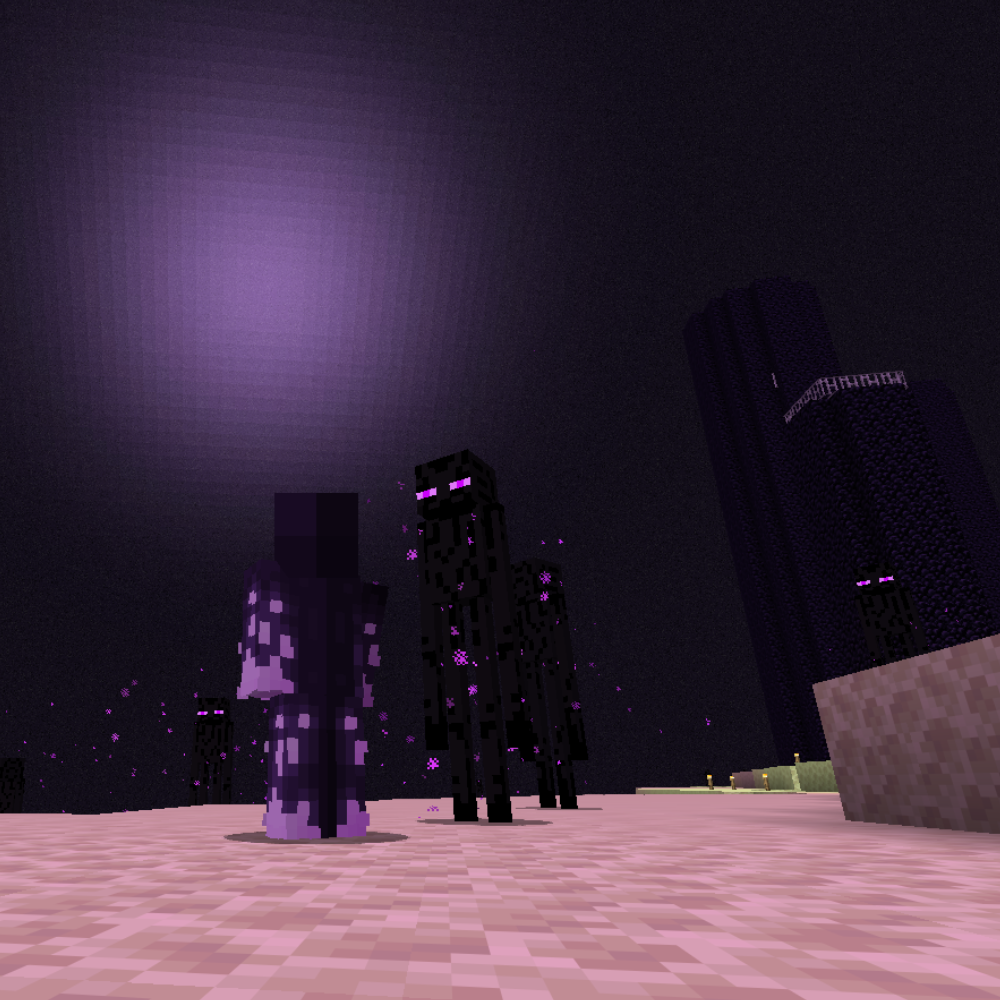
Minecraft has always been a deeply poetic game. On completing the game's optional “final boss”, players access a special portal and view the End Poem. The End Poem was written by Julian Gough in 2011 who, when tasked with writing something that would wrap up a game that is inherently open-ended, produced a poem that is not only about Minecraft but about the player's life and aspirations beyond the game.
Two voices that are “everything you think isn't you” speak about the player at the pivotal moment, when they have achieved so much in the game, and are on the verge of waking, as if from a dream. Through this dialogue, the End Poem presents an almost monistic philosophy to the player, suggesting they are not separate from the world, and that everything they have created and expressed through Minecraft is a part of the world.
In blending the game world and the real world, the poem tells a creation story of the “long dream of life, not the short dream of a game” and enshrines Minecraft's tenet that everything is connected, and that the game itself “will not tell the player how to live”. This tenet is made bittersweet by the fact that Gough released the poem to the public domain in 2022 after more than a decade of unresolved contractual rights challenges with Minecraft developers and Microsoft, an act exposing how the most sincere and artistic aspects of Minecraft collide with its ugliest most capitalistic parts. The End Poem now belongs to everyone, connected to all players.
and sometimes the player believed the universe had spoken to it through the zeros and ones
[...]
and the universe said you have played the game well
[...]
and the universe said you are not separate from every other thing
[...]
And the game was over and the player woke up from the dream. And the player began a new dream. And the player dreamed again, dreamed better. And the player was the universe.
- Julian Gough, The End Poem
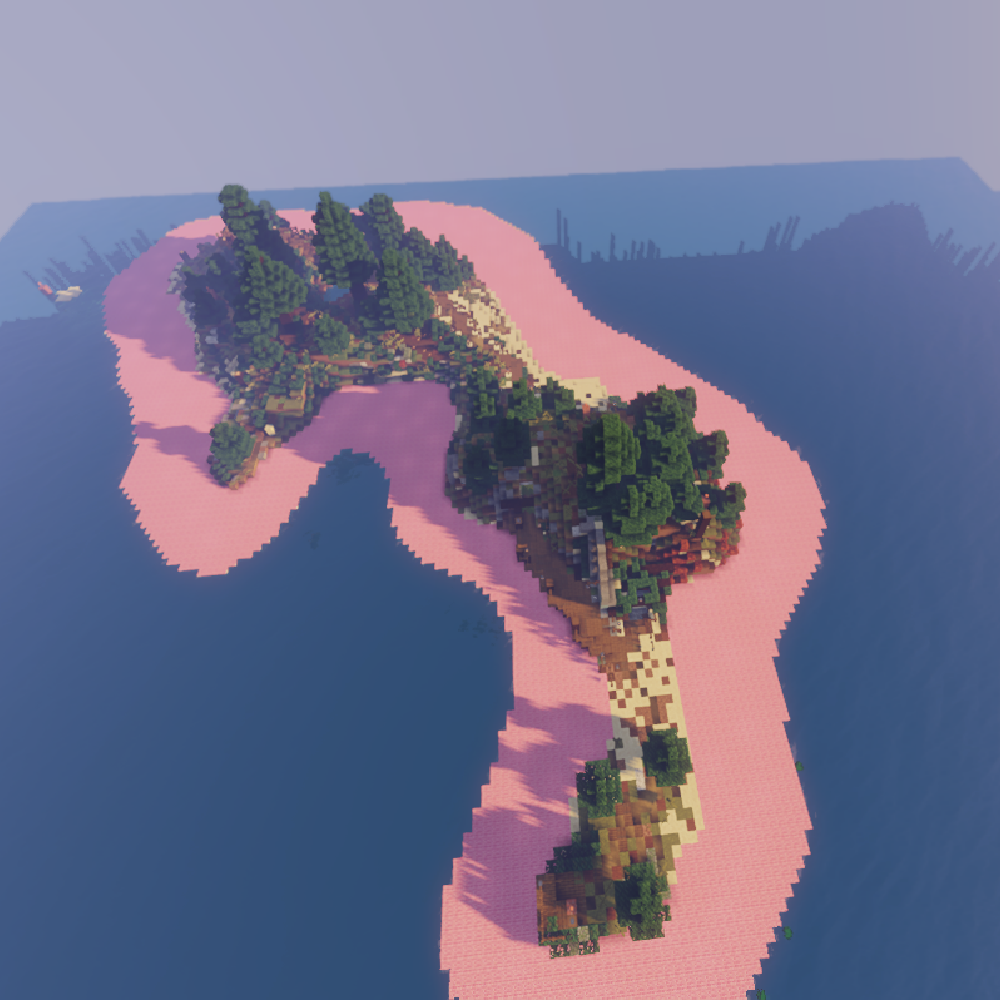
In responding to that tenet of creative freedom, writers have explored the literary potential of how a player can create and interact with text in a Minecraft world. Artist collaborators Adam Clarke and Victoria Bennett investigated several early ways the game allows players to write, store text, and have other players encounter it: re-naming items, building words in the sky, through to more technical command-driven inputs that generate text within the user interface so it appears floating on-screen. Their project culminated in My Mother's House, described as a “poem-world” where players walk through a house and encounter new stanzas as they move through each room, demonstrating the possibility of poetry that can be spatially explored.
As Minecraft has evolved, its openness and data-driven structure have made it even easier to manipulate its world and logic through code. Artists have used this to push Minecraft into stranger literary territory, such as the Minecraft Library of Babel, or Travess Smalley's Chance Language Resource Pack which replaces the textures of Minecraft's blocks with fragments of text, creating another kind of spatial poetry that generates endlessly alongside the landscape.
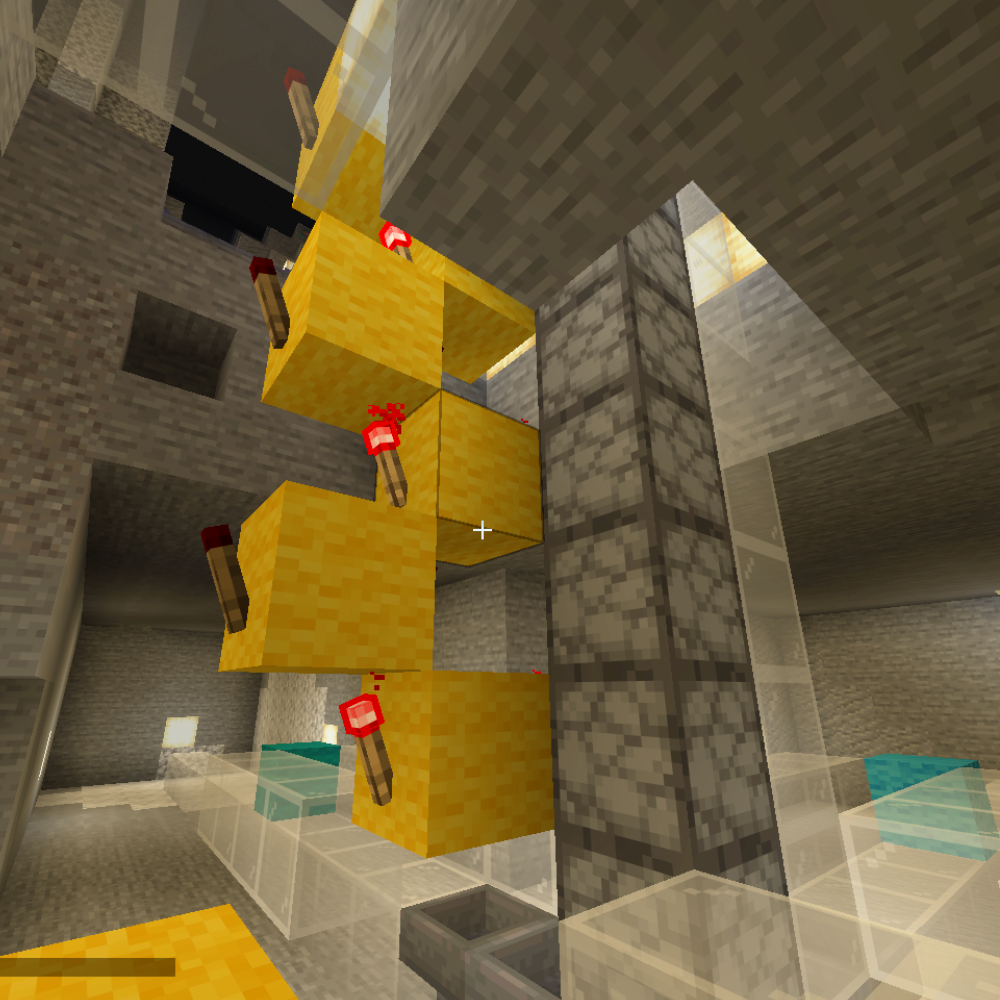
Command-driven and coded interventions into Minecraft produce incredible results, but I remain fixated on the possibility of vanilla gameplay as a modality for poetic resonance. What happens when poetry has to work within Minecraft's existing rules, rather than simply using Minecraft as a blocky canvas? My digital poetry has been so deeply inspired by the experience of exploring and surviving in Minecraft, it makes sense to integrate survival as a part of the poetic practice as I experiment with Minecraft as a medium.
The loneliness of that ever-unfolding scale of the world that initially resonated with me becomes part of the embodied process, and the in-world challenges overcome and time spent become an additional dimension of constraint. Says internet artist Jan Robert Leegte of re-creating land art in Minecraft : “[...] you do have to learn to play the game. [...] you also have to figure out how to make swords to hack the monsters to bits.” Using the items and blocks in the game for the properties they have when playing rather than overlaying new properties or manipulating the logic of Minecraft preserves the spirit of my poetic practice, where the virtual landscape imposes on the reader-player.
Replicating and extending my digital poetic practice inside Minecraft encouraged me down the rabbit hole of redstone. Redstone is a material in Minecraft that can be mined and then crafted into various components in order to create a rudimentary kind of electrical or programming framework in three dimensional space. A redstone circuit is like a digital logic system that can handle basic concepts like switches, logic gates, memory, variables and more, allowing players to build contraptions that range from door openers, to crop harvesters, to flying machines, walking robots and immense writing machines. You can play Minecraft on a redstone computer built inside Minecraft.
I am not an advanced redstoner. But what I have learnt in making poetry with code has given me a strong foundation for redstone, and what I learn with redstone I find I can apply back to my work when making digital poetry. A loop is just like a redstone circuit, an array is just like a storage chest, and a function to select a random word is just like a dispenser. These technical similarities give me the approach that I can then apply in meaningful ways to create poetry machines that make sense within the logic of my Minecraft world.
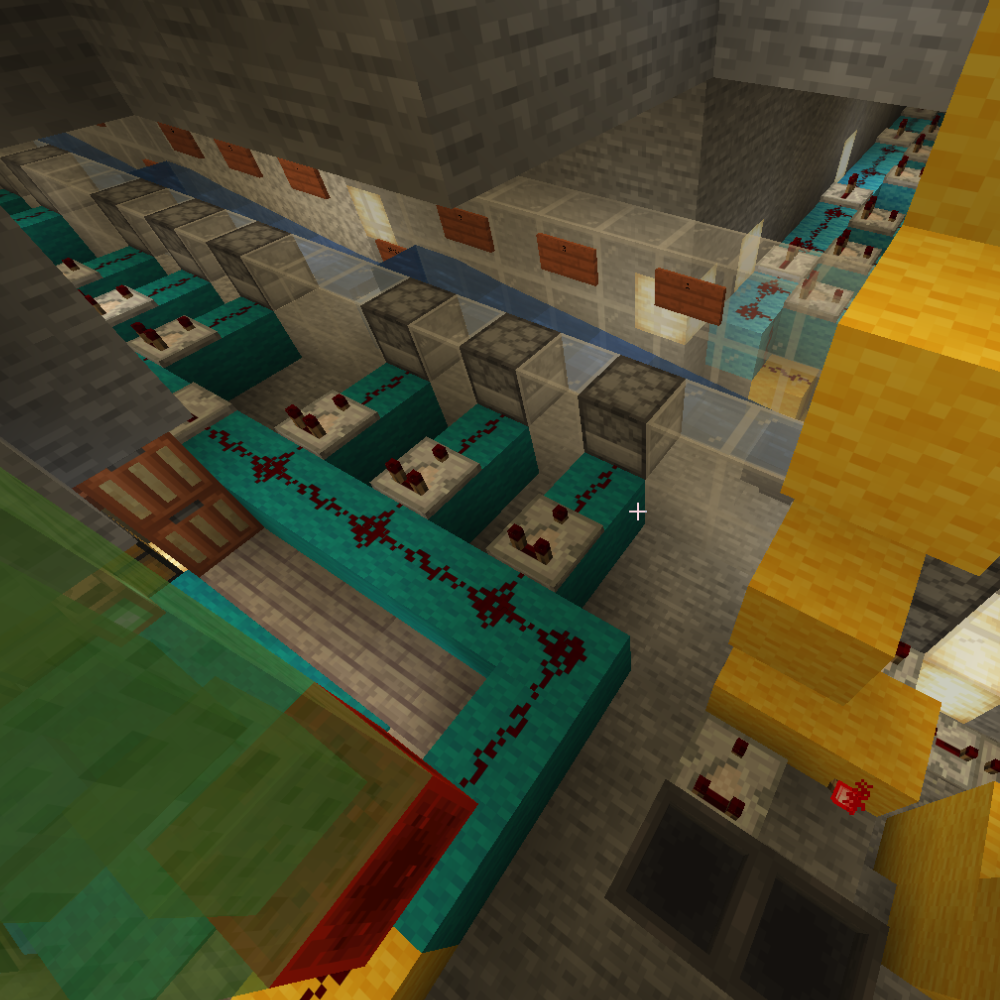
The first redstone poetry machine I ever created sits underground, below a large gazebo on the side of a rocky hill. I build terracotta steps up to the platform, so I can look back across the plains before I press the button that starts the machine. After a beat and the whir of pistons, a poem appears in the form of renamed items that plop one by one into my inventory in the correct order. This machine uses the constraints of inventory space and in-game renaming mechanics to create a small poem generator that produces a new result every time.
Creating a poem from renamed items, and a poetry generator from redstone, produces an immediate shift in the materiality of the poem. A word is already a block of meaning, to be arranged and sequenced alongside others, but here, the sets of words have become literal objects to be stored, selected, moved and delivered to me. These items are simultaneously words and objects—they retain their Minecraft materiality but they accumulate the meaning that I ascribe them in how they were collected and how I renamed them.
I can also walk around the physical structure of my poem, seeing its rules and processes materialised as a physical system, and watch it send and receive signals for each element before compiling its output. In a computational poem, the rules and processes that generate the poem are usually hidden in the code, invisible to the reader, but in a redstone machine, these rules become an architectural space the reader can see and explore.
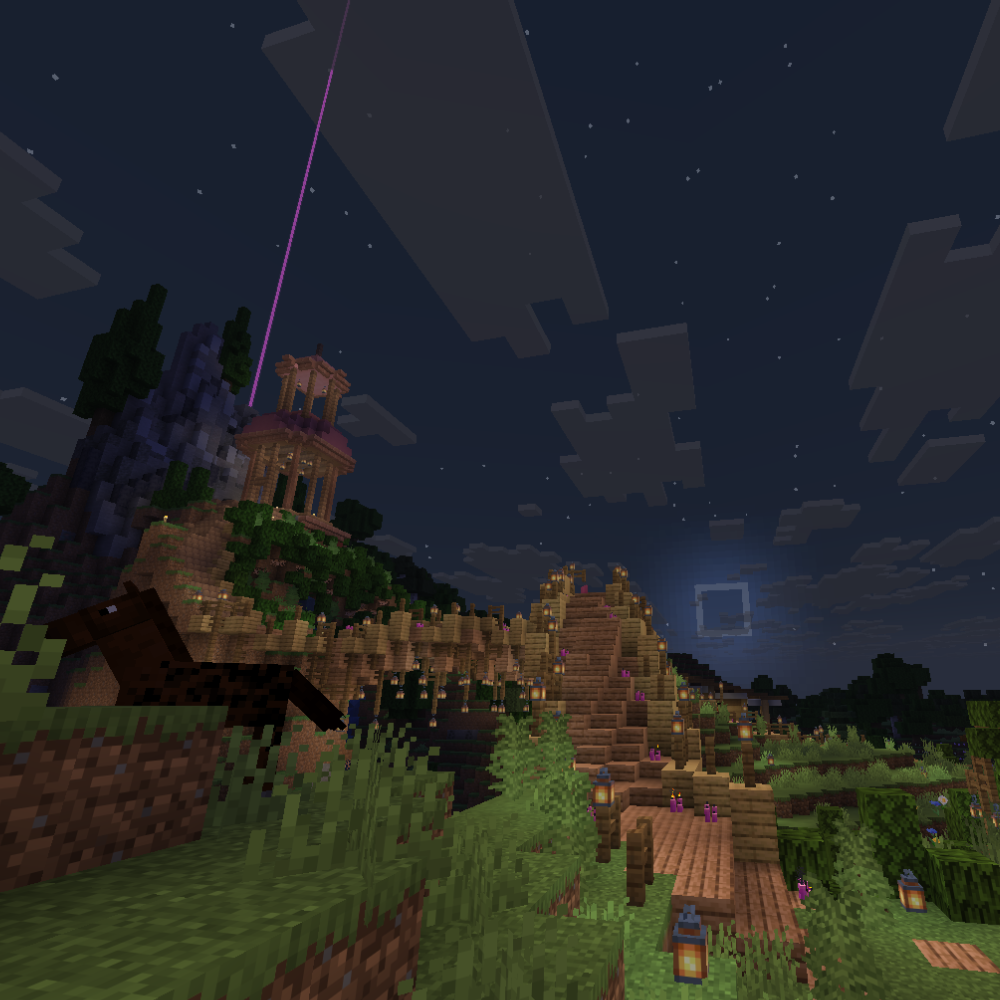
Beyond poetic structure and words, the surrounding landscape itself can also be considered as part of the work, in the way the terrain is shaped, viewpoints are composed, and thought given to how the eye moves through the scene. The poem becomes a big cubey Gesamtkunstwerk as it encompasses the choice and sequence of words, the structure, the process and the place. The location of the poem takes on a significance in its own right, as does each renamed block and item hand-gathered from far-flung biomes. The world is not separate from the poem because the world went into the poem.
On Minecraft, streamer Docm77 says that “the game is not an entity to me. It is millions of minds combined on common creative ground.” This description acknowledges both the importance of Minecraft as a game, and the feeling that it's a creative material to be tilled and worked with. The machines I make are shaped by the game's particular properties, but also by everything I have learnt from other players, artists, coders, and from the accumulated history of my own practice.
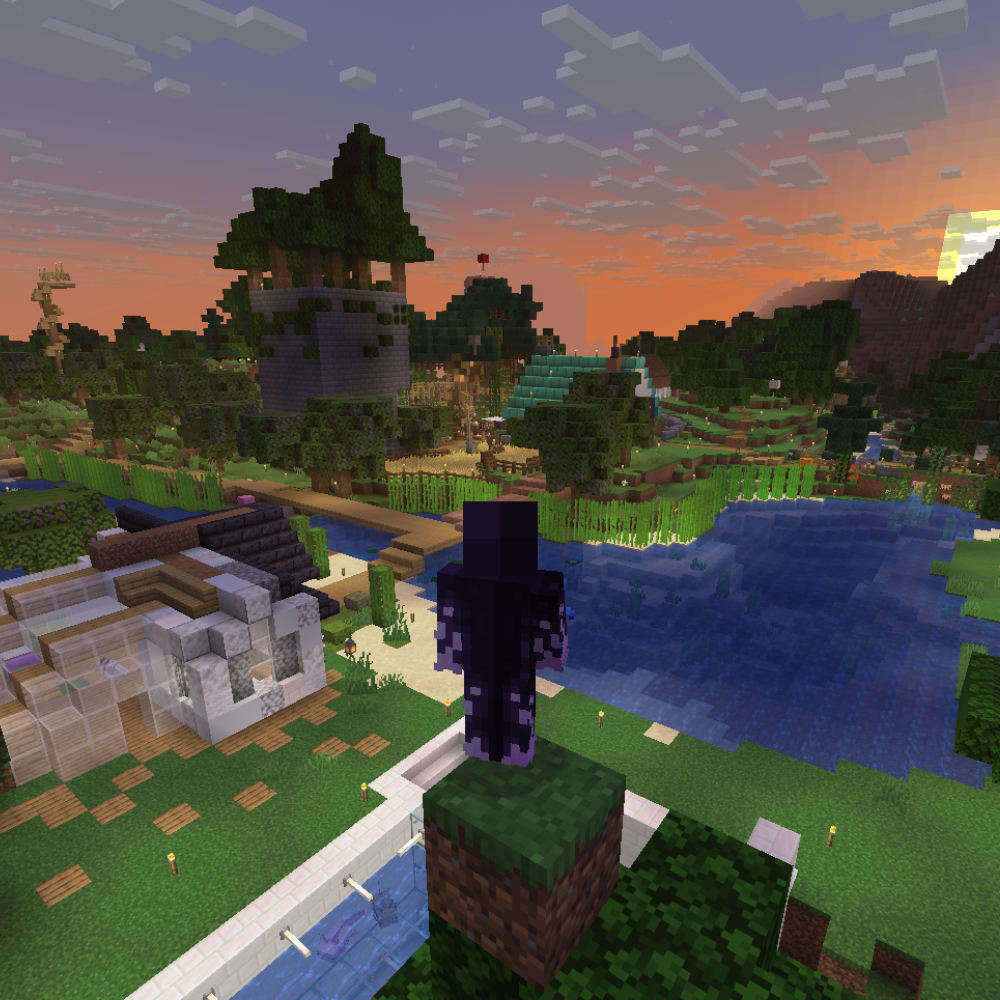
A specific material or tool can make certain things possible and render other things difficult, and in doing so gently shapes what can be made and what can be communicated. I could attempt to replicate a redstone poetry machine for the browser, but that version would lose the specific materiality that comes when words are renamed objects that move through redstone circuits, occupy inventory slots, and emerge from a machine in a treasured location. The specific constraints of a Minecraft poem are not hurdles to overcome so much as they are the form of the poem itself.
Minecraft is foundational to my creative practice, but feeding what I have learnt from computational poetry back into Minecraft feels particularly fulfilling. That defining challenge of Minecraft, where each player must discover their own purpose in their experience of a new world, is one I am answering each time I build a poetry machine. As I bring my own creative goals into the game I am also evolving what playing the game means to me. I play Minecraft to write poems, and I write poems to capture the feeling of a gridded world unfolding, as one interwoven practice, nothing separate from anything else.